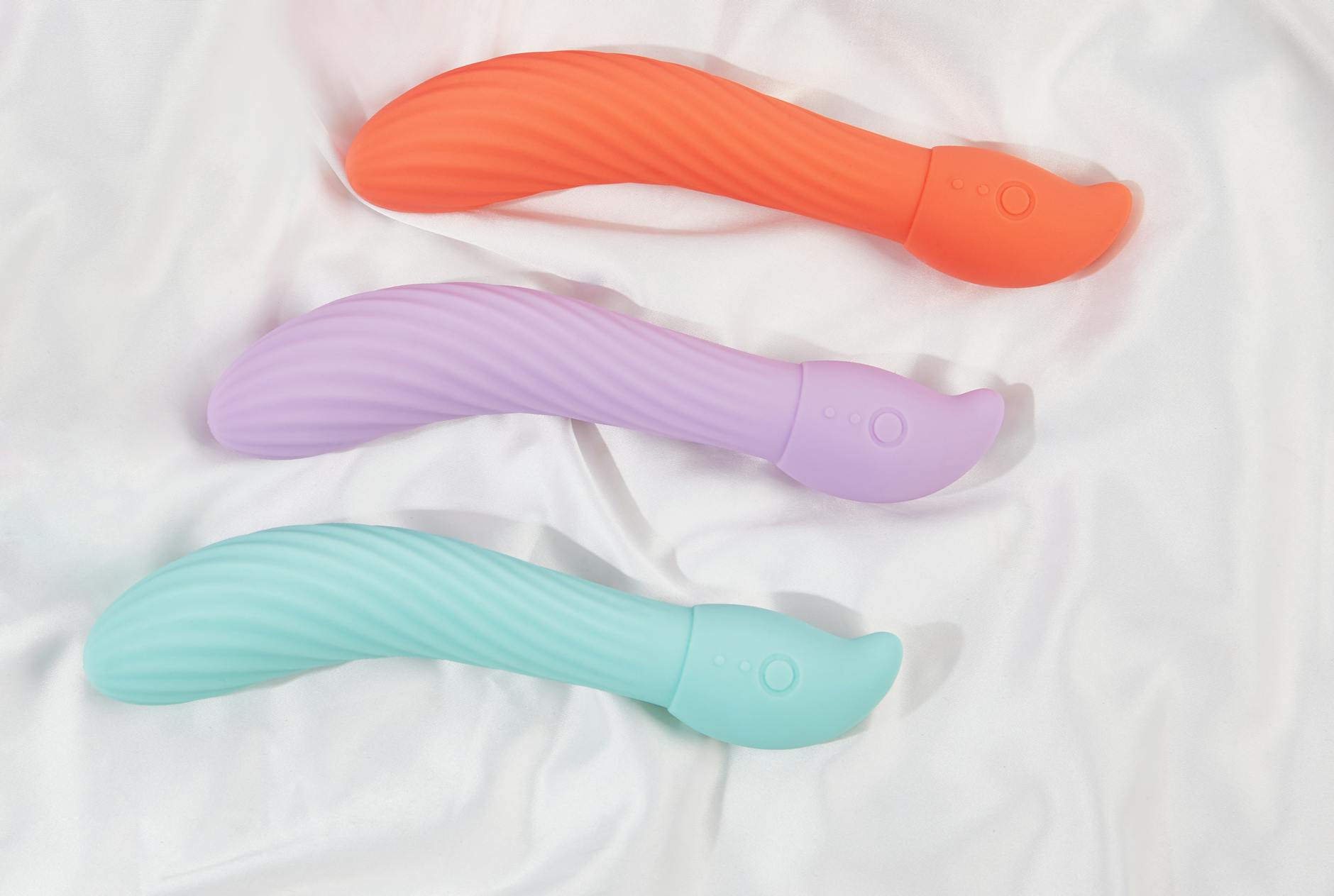
How Lemon Vibrators Improve Pleasure After Years Without Sexual Contact
Your body hasn't forgotten how to feel good. But relearning pleasure after a long gap takes time, patience, and the right tools. Here's what actually helps.
You haven't had sexual contact in years. Maybe it's been five. Maybe fifteen. The reasons don't matter right now. What matters is that your body, your brain, and your nervous system have all been in a kind of hibernation. And waking them up? That's not the same as turning a light switch on.
When you come back to pleasure after a long absence, several things are true at once. Your capacity for pleasure is completely intact. Your sensitivity is still there. But the pathway between sensation and response has gotten quiet. Your body is rusty. Your confidence probably is too. And that combination means that returning to pleasure requires more than just deciding to try again.
This is where I need to separate biology from psychology, because they're tangled up in ways that feel identical but need different approaches.
Biologically, your vulva and clitoris haven't actually changed much. Nerve endings are still there. Arousal capacity is there. But here's what has changed: your nervous system is less practiced at that particular activation. Think of it like a language you used to speak fluently but haven't practiced in a decade. The language center of your brain is still there. But the fluency is gone.
Physically, arousal takes longer now. Blood flow needs to be reactivated. Lubrication might take time to build. The pelvic floor, if you haven't been stimulating it, may feel tense in ways you didn't expect. None of this means anything is broken. It means your body is asking for a slower restart.
Psychologically, there's often shame layered on top. Or uncertainty. Or both. You might feel awkward about your own pleasure, which is a completely normal response to a long absence. Many people tell me they feel like a teenager again, except with the added burden of knowing what they're supposed to feel and not being able to access it immediately. That gap between expectation and reality is where frustration lives.
Lemon clitoral vibrators like the Lem use a different mechanism than traditional vibrators. Instead of vibration, they use air suction and gentle pulsing. This matters enormously when you're coming back after years because it reintroduces sensation without overwhelming the system.
Here's the practical reason: your clitoris has thousands of nerve endings concentrated in a small area. When you've been away from stimulation for a long time, direct vibration can feel too intense right away. It's like someone yelling after you've been in silence. Lemon vibrators work differently. The suction draws blood flow to the area gently and stimulates nerves without the same jarring sensation. It feels like a conversation with your body rather than a demand.
There's also a rhythm and control element that matters. With a partner, you're managing someone else's pace. With your hand, you might be self-conscious or tired. With a lemon vibrator, you can start at pattern one, the gentlest setting, and stay there as long as you need. You're not racing. You're not performing. You're just feeling.
Most importantly, there's an honesty to using a device when you're restarting. It removes the expectation that your body should respond like it used to, instantly and with no friction. It says: I'm going to give my body what it actually needs right now.
I'm a therapist, not a neurologist, so I'm going to tell you what I see clinically rather than what the neuroscience literature says. When people come back to pleasure after years away, the biggest block is usually not physical. It's permission.
Your body might not be responding the way you remember. But the real question underneath is often: do I deserve to feel good? Am I allowed to want this? Is it selfish if I prioritize this? These questions don't sound like they're about vibrators. But they absolutely affect whether a vibrator helps or sits in a drawer.
Using a lemon vibrator is an act of saying yes to yourself. It's saying: my pleasure matters enough that I'm going to give it real time and real attention. Not stolen moments. Not something that happens if my partner is in the mood. Real time. This reframing is what actually unlocks pleasure, and the vibrator is the physical representation of that decision.
If you're coming back after years, here's what I recommend to clients.
Start with your own body alone. This is not negotiable. You need to remember how your body feels before you're managing someone else's experience. Use a lemon vibrator in private, no goal except to notice sensation. That's it. If nothing happens the first time, that's fine. You're retraining your nervous system.
Keep lubricant nearby. After years away, your body might not self-lubricate as quickly as you remember. Water-based lubricant is essential. It's not a sign of dysfunction. It's a tool, exactly like the vibrator.
Start at the lowest setting. The Lem has multiple patterns. Begin at pattern one. Stay there until it feels good, which might take more than one session. There's no prize for using higher patterns. The whole point is reconnection, not intensity.
Give yourself permission to take breaks. Your body will fatigue differently than it used to. This is normal. A fifteen-minute session might be your baseline now instead of thirty minutes. That's completely fine. You're building a practice, not proving something.
Notice without judging. As you start feeling sensation again, you might notice you're irritated, bored, or disconnected. All normal. The vibrator isn't supposed to fix emotional stuff. It's supposed to help your nervous system remember that pleasure exists. The emotions often follow later.
If you're considering partnered sex after this long break, resist the urge to jump straight into that. The research on sexual reawakening is clear: people who restart pleasure alone first have significantly better outcomes when partners are eventually involved.
Why? Because you're not managing your own arousal and their expectations simultaneously. You're not worried about how you look or whether they're satisfied. You've just remembered what your body feels like when it's activated. That memory becomes the foundation.
When you do involve a partner, honest conversation matters more than anything. Your body might respond differently. Timelines might be different. And that's not a failure. It's just the reality of coming back. A partner who understands this is a partner who can actually help.
Let's be realistic. In the first month of restarting, you might notice any or all of these: increased sensation awareness, a deeper connection to your body, some sessions where arousal is easy and others where it's not, and a general sense of permission that extends beyond sex. Some people notice they're sleeping better. Others mention feeling more energized.
You probably won't feel exactly like you did before. That's not the goal. The goal is to feel present in your body right now.
Many people also report that once they've reactivated sensation on their own, their interest in partnered sex naturally returns. Not because they're forced to pursue it, but because pleasure feels available again. That availability changes everything.
There's no timeline. Some people notice increased sensation within two to three weeks of consistent practice. Others take two to three months. The gap between years of inactivity isn't the main factor. What matters more is consistency and whether you're working against internalized shame. If you're using a lemon vibrator three times a week, you're likely to notice changes within four to six weeks. Consistency matters far more than duration.
Actually, many people find them more effective for rebuilding because they feel less jarring. You can control the intensity from the very start. Traditional vibrators often come in at a baseline that might be too much when you're just reawakening. The suction-based mechanism of a lemon vibrator is gentler and more intuitive for someone who's been away from sensation.
This is probably the most important question. Yes, absolutely. In fact, using a lemon vibrator might help. It shifts your relationship with your body from observation to sensation. You're not looking at yourself. You're feeling. That's often the first step toward comfort. Many people find that reconnecting with pleasure helps them stop criticizing their body and start appreciating what it can feel. The discomfort usually decreases with practice.
If the reason you've been away from sexual contact for years involves trauma, a breakup that left deep wounds, or significant shame, working with a therapist alongside physical reawakening is genuinely helpful. A therapist and a lemon vibrator aren't competing. They work together. The vibrator handles the physical retraining. The therapist handles the emotional work.
Completely. Using one alone is an act of self-care and self-discovery. Using one with a partner introduces vulnerability, trust, and shared intimacy. Both are valuable, but they're different experiences. Coming back to your own body first gives you groundedness for the second experience.
Lemon vibrators are particularly good for people returning to sensation because they're customizable from the ground up. You can start extremely gently. But if you have strong preferences for different stimulation types, trust that. The Lem is excellent for most people, but the best vibrator is the one you'll actually use. If you're uncertain, the buying guide at Hello Nancy walks through the different tools available.
Coming back to pleasure after years is absolutely possible. Your body hasn't forgotten. Your capacity hasn't diminished. You've just been quiet for a while. A lemon vibrator is a tool that helps you speak that language again, starting slowly, starting safely, starting with yourself.
The first time you feel genuine arousal return after years away, it's often surprising. It might feel smaller than you remember, or different, or somehow quieter. That's not less. It's just real. And from there, everything else builds.
You deserve to feel good. That's not a nice sentiment. That's a fact. If you're ready to restart, we're here to help. Reach out to us at Hello Nancy, and we can answer any questions about which tools might work best for your situation.