Let's be real: after 15, 20, 30 years with one person, your body isn't just a body anymore. It's a shared landscape, mapped by habit and history. When that person leaves, your body becomes a place you don't recognize. Pleasure doesn't just fade. It evaporates.
I've worked with hundreds of people navigating this exact rupture. They describe it the same way. "I don't know how to want anything for myself." "I don't remember what my own body feels like." "The idea of touching myself feels disloyal, even though it shouldn't."
These aren't failures of character. They're exactly what happens when your pleasure has been tethered to one person for decades. Rebuilding it isn't about jumping into dating or forcing yourself to feel sexy. It's about patient, practical reconnection with yourself.
When you've been partnered for years, your nervous system gets used to one rhythm, one set of touch cues, one particular way of being pursued. Arousal becomes reflexive. You're not deciding to be interested. You're responding to a familiar stimulus. Then suddenly that stimulus is gone, and your body has no idea what to do with itself.
There's also the psychological layer. In long marriages, especially ones where sex was stable and routine, pleasure gets bundled up with commitment, security, and identity. When the partnership ends, all of those anchors vanish at once. Your body might interpret self-pleasure as disloyal or even dangerous, because for decades it understood pleasure as a partnered act.
The third piece is neurological. Decades of coupled pleasure creates neural pathways. Those pathways don't disappear overnight. They're like muscle memory. Your brain is still reaching for that familiar partner, that familiar sequence, even though it's not there.
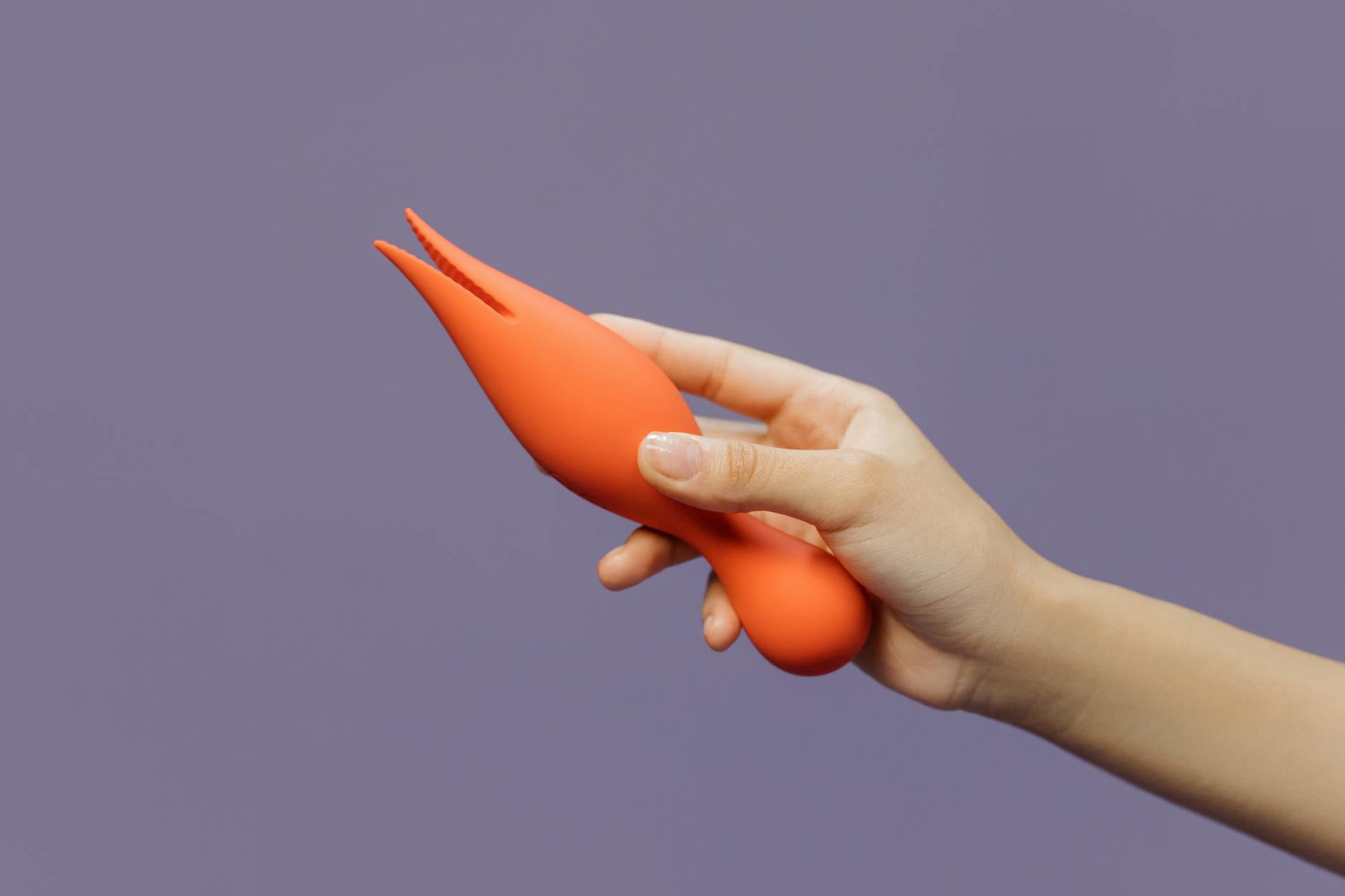
Lemon clitoral vibrators work differently than traditional vibrators. They use pulse and suction instead of buzzing friction. For someone rebuilding pleasure after long-term loss, this distinction matters.
When you're starting from zero, your clitoris might feel numb or oversensitive, depending on how long it's been since it got attention. A traditional vibrator is aggressive. It demands a response. A lemon clitoral vibrator is patient. It invites your body to wake up gradually, without forcing it.
I recommend lemon vibrators for this phase because they allow you to control the intensity more precisely. You can start at the lowest pulse setting and let your nervous system adjust at its own pace. You're not being pushed. You're being invited.
The other reason is purely physical. After years of specific partnered touch, your clitoris might feel unfamiliar. A suction-based device like the Lem creates a different sensation than a penis or a finger ever could. That difference is actually helpful. It prevents you from chasing your ex through sensation. It gives you something entirely new to experience.
Pleasure doesn't rebuild without processing the loss. I'm not saying you need years of therapy before you touch yourself again. I'm saying that without acknowledging the grief, you'll sit down to explore yourself and instead find yourself crying about what's gone.
Before you introduce any toy, spend a few weeks on basic body reconnection. Touch your arms, your neck, your thighs. Take baths. Feel your skin in the dark. This sounds small. It's not. Your body has learned not to feel, because feeling led to wanting, and wanting led to longing for a person who isn't coming back.
You're retraining your nervous system to understand that touch can be for you. Not for someone else. Not to prove anything. Just for the sake of the sensation itself.
Once that foundation is there, introducing a lemon vibrator feels less like betrayal and more like curiosity.
First: pick a time when you're genuinely relaxed, not when you're testing yourself or checking a box. Early evening, after everyone else is asleep, works better than "I have 45 minutes before work." Your body can tell the difference.
Second: lube. Always. Even if you think you don't need it. Water-based lube reduces friction and lets the suction mechanism work better. It also signals to your body that something pleasurable is about to happen.
Third: start at the lowest intensity setting on your lemon vibrator. Pattern one or two. Don't rush to the aggressive patterns. Your clitoris is waking up from sleep. It doesn't need to be jolted.
Fourth: expect this to feel weird. Not bad, necessarily, just unfamiliar. Your body has lived in partnership for so long that solo sensation might feel almost alien. That's normal. Stay curious instead of judging.
Fifth: don't have a goal. Not even an orgasm goal. The point here isn't to climax. The point is to rediscover what your body is capable of feeling when you're the only one orchestrating the pleasure.
Some people find themselves again in weeks. Others take months. Both are fine. If you've been coupled for two decades, you're not going to plug yourself back in over a weekend. That's not how nervous systems work.
You might notice that some days you feel curiosity and some days you feel nothing. You might have sessions where your mind drifts to the old relationship, and you have to gently redirect your attention back to your body. All of this is part of the process.
The timeline doesn't matter. What matters is that you're choosing this for yourself, at your own pace, with a tool that actually respects what you're going through. Lemon vibrators are forgiving. They allow slow rekindling instead of demanding intensity.
After months of this, something shifts. You start using the vibrator not because you're trying to heal, but because it feels good. That moment is the real turning point. When pleasure stops being about recovery and becomes just something you enjoy.
When you've been partnered for decades, your identity gets absorbed. You're not just yourself. You're a couple. You're a unit. When that ends, your sense of self gets fractured. Pleasure is one way to rebuild it.
As you reconnect with your body through tools like a lemon clitoral vibrator, you're also deciding something important: your pleasure matters. Not because someone else cares about it. Because you do. That's not a small thing. That's the foundation of everything that comes after.
You might eventually want a new partner. You might not. Either way, the pleasure you rebuild now is entirely yours. It's not borrowed from someone else's desire. It's not contingent on their presence. It's clean, selfish, and entirely legitimate.
You're not moving on from your ex. You're moving forward into yourself.
There's no fixed timeline, but most people report that curiosity returns within weeks, while genuine pleasure rebuilds over 2-4 months. Your nervous system needs time to adjust to being the only person directing sensation. Some people reconnect faster if they're actively grieving and processing. Others need longer. The speed isn't a sign of how well you're healing. Patience is the actual indicator of good recovery.
Absolutely. Anger and pleasure aren't mutually exclusive. You might find that pleasure feels easier when you're angry, because anger gives you agency. You're doing this for you, not for them. If anything, the distinction helps. You're not trying to feel close to the relationship. You're consciously building something separate from it.
Possibly, in the moment. Solo pleasure can highlight the absence of a partner. If you're expecting the toy to fill that hole, you'll be disappointed. But if you're using it as a tool to reconnect with your own body, it often feels the opposite of lonely. It feels reclaiming. The loneliness tends to show up before you reach for the toy, not after. The toy is part of the antidote.
Guilt is common and worth examining. If you were taught that pleasure is contingent on partnership, your nervous system might equate solo pleasure with infidelity, even years after the relationship has ended. That's a belief worth challenging. Your pleasure was never his or hers to own. It was always yours. You're not betraying anyone by reclaiming it. You're honoring yourself.
You're ready when the idea of touching yourself doesn't feel like it requires therapy as a prerequisite. You don't need to feel eager. You just need to feel open. Curiosity is enough. If you're reading this and wondering whether you should try a lemon clitoral vibrator, you're probably ready. Your hesitation is just your nervous system being cautious. That's intelligent.
No. This is for you. If you're in a new relationship eventually and want to involve a toy, that's a separate conversation. For now, your pleasure is private property. Rebuilding it without an audience is part of what makes it actually yours. Keep it close.
Rebounding into solo pleasure after decades of partnership isn't about "getting over" someone. It's about building yourself back up in a way that includes your sexuality as something that belongs to you alone.
When you pick up a lemon clitoral vibrator weeks or months after a long relationship ends, you're not just exploring sensation. You're deciding that your body matters. Your pleasure has value. You're worth the time and curiosity it takes to rediscover yourself.
That's the real healing. The pleasure is just the evidence that it's working.
Ready to explore? Start with the lowest intensity setting. Give yourself time. Your body remembers how to feel good. You're just reminding it that you're worth the effort.