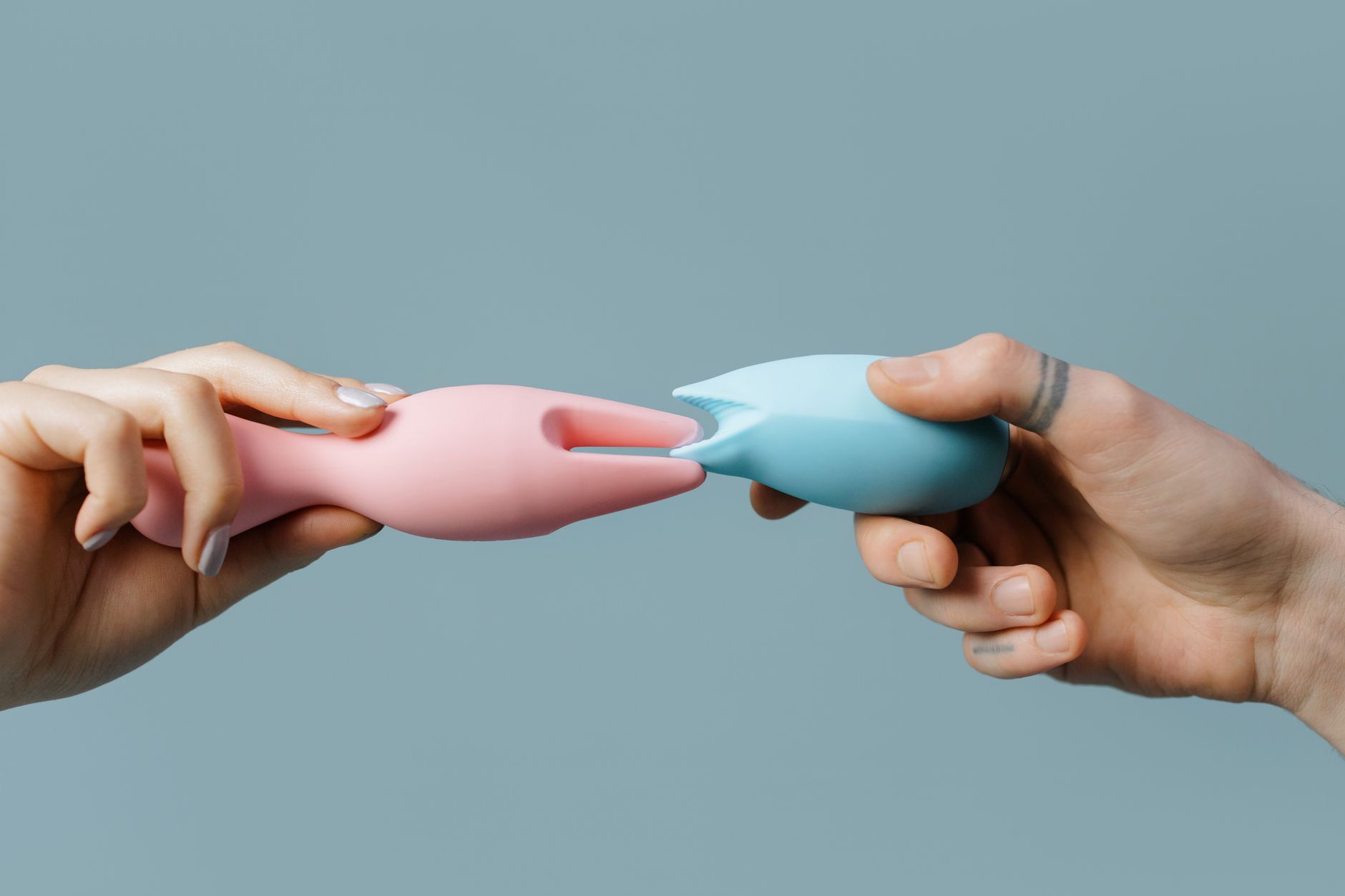
How to Use a Lemon Vibrator for Better Sensation if You've Never Been Able to Orgasm
Anorgasmia isn't a personal failure. Here's what lemon vibrators actually do differently, and why sensation you thought was impossible might be waiting on the other side of some very specific technique.
It doesn't mean your body is wrong. It means you haven't found the right combination of pressure, rhythm, patience, and mental permission yet. Anorgasmia is shockingly common, and most people who experience it aren't broken. They're usually just using the wrong tool or the wrong technique for their neurology.
A lemon clitoral vibrator works differently than fingers, different vibrators, or anything else you might have tried before. Not better necessarily, but different. And for some people, different is the door that opens everything.
The clitoris has 8,000 nerve endings concentrated in a space the size of a pea. Traditional vibrators use rapid oscillation. Lemon vibrators, by contrast, use pulsing suction patterns that don't rely on direct friction alone. This matters because anorgasmia often stems from one of two things: either the nerve endings need a completely different kind of stimulation, or the mind needs permission to let go of control.
With a lemon vibrator, you're not pressing or grinding. You're creating gentle waves of suction and release. For many people who've felt numb or resistant to sensation, this pattern feels less invasive, less demanding. Your nervous system can relax enough to actually feel something.
The second reason: intensity control. Most people experiencing anorgasmia start too strong. You touch the vibrator to your skin at level 5 or 6, feel overwhelming sensation, and your pelvic floor tenses up in defense. Game over. A lemon vibrator starts at level 1, which is genuinely whisper-soft. You can spend 20 minutes at that level before your body even registers it as stimulation. That patience is crucial.
When I work with clients who've never experienced orgasm, I tell them to throw out everything they think they know about the process. You're not trying to "get there." You're literally just gathering data about what sensation feels interesting.
Start with these four things in place:
Mental space first. You need at least 45 minutes and no risk of interruption. Lock the door, put your phone in another room, tell your partner you're unavailable. Your brain needs to know it's safe to drop into your body. Anorgasmia often shows up when there's even a flicker of anxiety in the background.
Lube, always. Water-based, generous amounts. Not because you're dry, but because it removes friction-related discomfort that can trigger your nervous system to clamp down. The lemon vibrator works best when your skin is slick. Dry skin creates resistance, and resistance becomes a reason to tense up.
Temperature regulation. Keep a blanket nearby. Many people with anorgasmia notice their body gets cold during arousal attempts, which is often a sign of nervous system activation. Warmth helps you stay grounded.
A meditation or breathing app. Seriously. You're going to use this during, not before. Most people who've never had an orgasm carry tension in their pelvic floor from years of bracing against disappointment. Box breathing (four counts in, four counts hold, four counts out) while using a lemon vibrator gives your mind something to do besides perform.
Turn it on at level 1. If level 1 feels like nothing, stay there for five minutes anyway. You're waiting for your nervous system to register sensation, not chasing intensity.
Approach from the sides of the clitoris, not the top. The shaft of the clitoris is more sensitive, and for people with anorgasmia, approaching head-on can feel too intense too fast. Work the sides, the base, the inner labia. Let your body decide where feels interesting.
When you find a spot that creates sensation (not necessarily pleasure yet, just sensation), keep the lemon vibrator still. Don't move it in patterns. Just hold it there. Your instinct will be to chase the feeling, to move it around. Resist that. Stillness is where anorgasmia dissolves, because your body learns "this is safe, nothing's changing, I can relax."
After five minutes of stillness, increase the level by one. Then wait another five minutes. This slow climb gives your nervous system time to adjust without triggering the fight-or-flight response that kills arousal.
If you feel pressure or urgency to "finish," you're done. Literally stop. You've just gathered important information: your body learned that this pattern of stimulation is safe. That's massive progress.
Most anorgasmia has psychological roots, not physical ones. You've spent years anticipating failure, bracing for disappointment, or managing pressure from partners. Your nervous system is trained to protect you from that feeling by shutting down sensation.
Using a lemon vibrator won't fix the psychology by itself. But it creates space for it to shift. Because you're not depending on a partner, you're not performing, you're not on a timeline. You're literally just exploring what your body can feel when it's allowed to be slow and weird and take its time.
If you find yourself getting frustrated or disappointed during a session, pause. Write down what you felt before the frustration hit. Tingling? Warmth? Softening? Those are the breadcrumbs. Your next session, you aim for that exact sensation again.
If you've never orgasmed, you're probably looking at 4-8 weeks of consistent, patient exploration before anything shifts. Not because something's broken, but because your nervous system needs time to unlearn the pattern of shutdown.
Two or three sessions a week, 45 minutes each. Using a lemon vibrator at low levels, staying still, breathing, building tolerance for sensation. This isn't fast. It's not exciting. But it works because it's boring enough that your nervous system stops bracing.
Some people experience their first orgasm during a session. Others experience it weeks later during partnered sex, or during solo exploration with nothing but their hand, because they've finally learned what their body is capable of. The orgasm itself almost becomes secondary to the fact that sensation has returned.
If you're using a lemon vibrator consistently for eight weeks and still experiencing complete numbness, talk to a pelvic floor physical therapist. Anorgasmia sometimes has a physical component, like pelvic floor tension or nerve-related issues that need professional attention.
If the psychological piece is overwhelming, a sex therapist is worth the investment. This is their exact specialty. They can help you identify where the nervous system shutdown started and give you tools to release it faster.
Your partner, if you have one, should know you're exploring this. Not as pressure or expectation, but as context. Many partners feel confused or hurt when they discover anorgasmia, thinking it's about them. Letting them know you're actively working on it, and that it's about nervous system patterns, can transform the dynamic from shame to support.
Anorgasmia is not a life sentence. I've worked with clients in their 20s who thought they were broken forever, and I've worked with clients in their 60s who had their first orgasm after using the right tool in the right way with the right mindset. Your body is capable of pleasure. You're just finding the frequency it's been waiting for.
Yes. Lemon vibrators work through a different mechanism than traditional vibration, using gentle suction and pulsing instead of rapid oscillation. This pattern often bypasses the nervous system patterns that shut down sensation. Consistency and patience matter more than the tool itself, but many people report sensation returning for the first time when they switch to this type of stimulation. It's worth a genuine attempt, six to eight weeks of regular sessions.
There's no universal timeline. Some people feel a shift in sensation within two or three sessions. Others take eight to twelve weeks. The key is that you're gathering data, not chasing an outcome. Many people experience their first orgasm weeks after they stop actively trying for it, once their nervous system realizes the stimulation is safe and they can relax into it.
Start alone. Anorgasmia often involves performance anxiety, and having a partner present (even a supportive one) can reactivate that pattern. Once you've experienced sensation returning in solo sessions, partnered exploration becomes possible. Then the conversation with your partner shifts from "why can't you orgasm" to "here's what we discovered works."
You might have significant pelvic floor tension. Start with just holding it against your skin without turning it on, while breathing and relaxing. Let your body adjust to the sensation of having something there. Some people spend a full session just getting used to that. Then try level 1 the next time. Pressure-free exploration is crucial.
Yes. Antidepressants, anti-anxiety medications, and some hormonal birth controls can affect orgasm capacity. If you're on medication and experiencing anorgasmia, talk to your prescriber about whether the medication might be contributing. In many cases, a dose adjustment or switch helps. A lemon vibrator still works alongside medication, but knowing that context helps you troubleshoot more effectively.
Yes. Lemon vibrators use suction and pulsing patterns that feel gentler and less aggressive than traditional vibrators. For many people with anorgasmia, this difference is significant. The reduced friction-based stimulation can feel less overwhelming, which allows the nervous system to relax enough to register sensation. That said, some people respond better to other tools. The point is to experiment intentionally, not to expect any single tool to be universal.
Meston, C. M., & Frohlich, P. F. (2000). The Neurobiology of Sexual Function. Archives of General Psychiatry, 57(11), 1012-1030.
Barba, K. B., Fam, P., & Balon, R. (2020). Sexual dysfunction and psychotropic medications: A clinical update. Current Sexual Health Reports, 12(3), 65-82.
Davis, S. N., Bergman, G., & Kingsberg, S. A. (2018). Anorgasmia in Women of Middle-Age: Risk Factors and Medical Correlates. Menopause Review, 17(2), 48-54.
Brotto, L. A., & Ley, D. J. (2016). The New Topping Book: Getting into the Psychological Roots of Sexual Pleasure. Journal of Sexual Medicine, 13(4), 620-631.