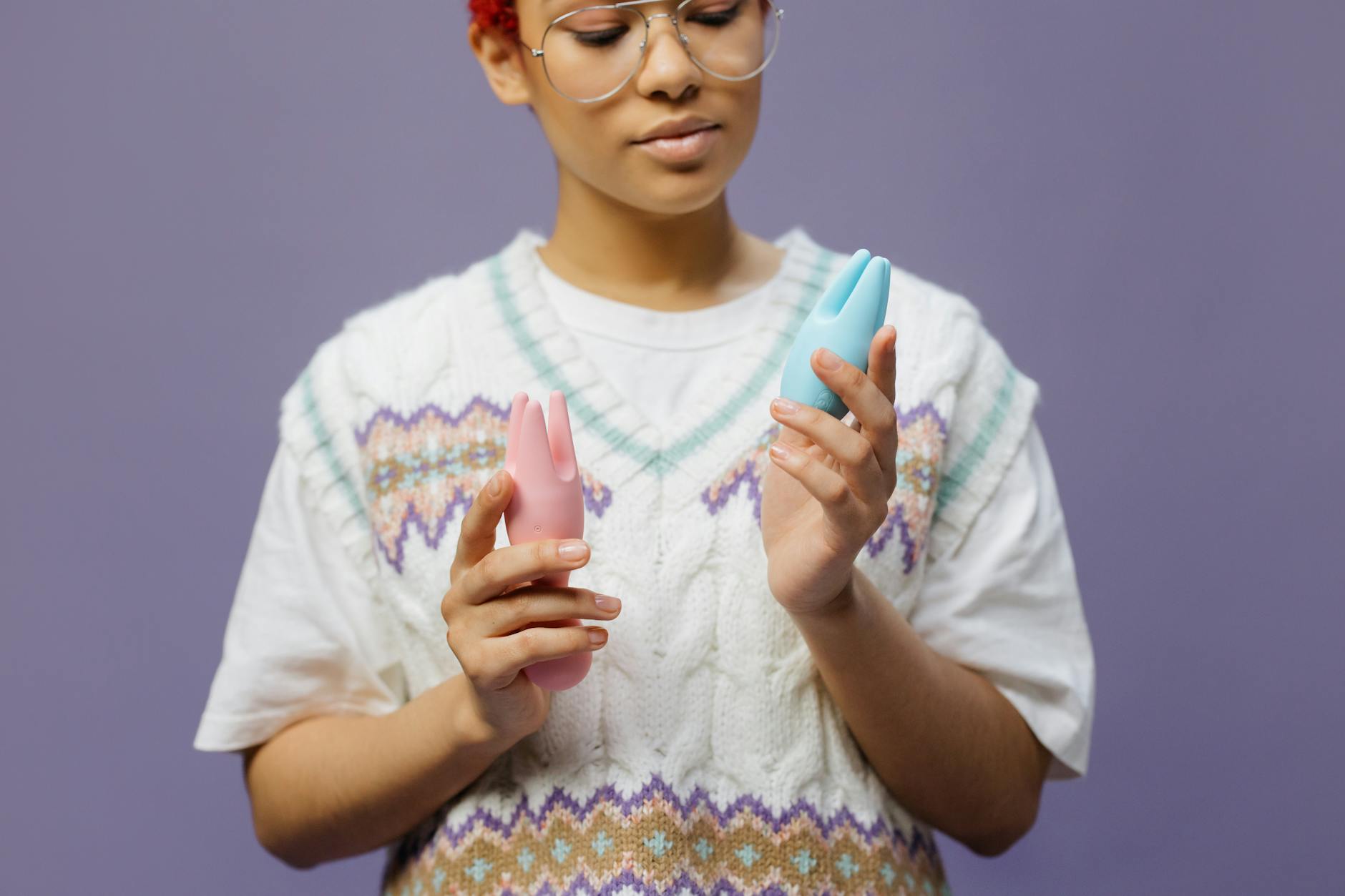
Higher estrogen means heightened clitoral sensation. This sounds like it should be universally good news, but if you're not expecting the shift, it can actually feel like too much. The same lemon clitoral vibrator that felt perfect at pattern 5 last week might feel sharp or even uncomfortable this week. You're not broken. Your body is just more responsive right now.
I see this happen most often during the follicular phase of the menstrual cycle, in the weeks leading up to ovulation, and sometimes during hormonal therapy adjustments. The clitoris becomes more engorged with blood, the nerve endings fire more easily, and what used to feel pleasurable can tip into hypersensitivity. The good news: it's completely manageable once you understand what's happening and adjust your approach.
Estrogen does several things to your pelvic tissue simultaneously. It increases blood flow to the vulva, which makes the clitoris swell slightly and become more sensitive to touch. It also thickens the tissue layers, which paradoxically makes nerve endings more accessible. Your vaginal lubrication increases too, which changes the glide and friction profile. All of this together creates a perfect storm of heightened sensation.
The intensity isn't permanent and it's not a sign you should stop using your lemon vibrator. It's actually a signal to recalibrate your technique. Think of it like adjusting the volume on music you love. The song doesn't change. You just turn it down to the right level.
This is especially important if you've recently started hormonal birth control, switched formulations, or began hormone replacement therapy. The first two to four weeks are often when sensation feels most unpredictable. Once your body adapts, things often settle into a new baseline that you can work with consistently.
Here's what I recommend most: stop using your highest patterns during high-estrogen windows. This sounds like stepping back, but it's actually expanding your range.
If you normally start at pattern 3 and work up to pattern 6 on your lemon vibrator, during higher-sensitivity phases, begin at pattern 1 or 2 instead. Spend more time there. Let your body warm up and become accustomed to the sensation. You'll often find that after 5 to 10 minutes, what felt sharp initially becomes more nuanced and pleasurable.
Many people also find that they prefer the lower-frequency patterns (the gentler, more sustained pulses) during these phases instead of the higher-frequency ones (the faster buzzes). Your Lem vibrator has enough range built in that you can stay within one device and completely change the experience by working with different patterns intentionally.
The rhythm matters too. Instead of pressing the Lem directly against your clitoris at pattern 5, try hovering it slightly off your body at pattern 2. The sensation travels through tissue without the direct pressure. You get stimulation without overstimulation.
When estrogen is high and your clitoris is extra sensitive, the foreplay phase becomes your best friend. This is the time to spend 10 to 20 minutes warming up your whole body before you bring the lemon vibrator anywhere near your clitoris.
That might mean starting with touch somewhere completely different, like your breasts or inner thighs. It means taking time to feel arousal building gradually instead of jumping straight to high intensity. This isn't about lasting longer or performing. It's about letting your nervous system catch up to the physical changes happening in your tissue.
When you do introduce your clitoral vibrator, begin at a much lower intensity than you think you need. Yes, it'll feel light at first. That's intentional. Your body is already primed. As blood flow continues to increase, you'll feel the sensation deepening without you having to turn it up. Sometimes the most intense orgasms come from letting the intensity build slowly rather than starting hard.
Also consider where on your clitoris you're placing the Lem. During lower sensitivity phases, you might apply it directly to the clitoral glans. During higher sensitivity phases, try placing it on the clitoral hood instead, or on the visible part of the labia where the tissue is slightly less dense. You're getting stimulation with less concentration of pressure.
If at any point during a high-sensitivity phase the sensation feels too intense, stop. This is not failure. This is feedback.
Take a 30-second break. Breathe. Move your lemon vibrator away from your clitoris entirely. Spend a minute or two on the outer labia or your thighs instead, or turn off the vibrator and use just touch. Let your nervous system recalibrate.
Then resume at a lower pattern, a different location, or with less direct pressure. You can also put a thin cloth like a silk scarf between the Lem and your skin. It dampens the sensation just enough to make it comfortable without losing the benefits of clitoral vibration.
The break strategy is especially useful if you're new to a hormonal change and don't yet know your sensitivity ceiling. Each break teaches you something about what works for your body right now. That data is gold for future sessions.
Counterinsensitive as it sounds, adequate lubrication actually makes high-sensitivity phases easier, not harder. Here's why: when there's enough lubrication, there's less friction. Less friction means the sensation is smoother and less sharp, even at the same vibration intensity.
Use a water-based lubricant generously during high-estrogen windows. Apply it directly to your clitoris before you introduce your vibrator. Reapply halfway through if it's drying. This is the simplest, most effective way to stay comfortable while your tissue is hypersensitive.
You'll notice the lemon vibrator glides differently with plenty of lubrication. It feels more enveloping, less stabbing. Same device, same pattern, but a completely different quality of sensation. This is the sweet spot during hormone surges.
Start tracking roughly where you are in your cycle or your hormone adjustments, and notice whether your lemon vibrator feels intense or gentle that week. After two or three months, you'll see a pattern. Most people find they need pattern adjustments during specific windows and are back to their baseline the rest of the time.
This information makes planning for pleasure easier. During your lower-sensitivity weeks, you might take your vibrator on a journey from pattern 1 all the way to 6. During your higher-sensitivity weeks, you stay in patterns 1 through 3. Neither is better. They're just different experiences.
If you're on hormonal contraceptives or hormone therapy, check in with yourself every four to six weeks during the adjustment phase. Sensitivity often peaks around week two or three after starting something new, then settles. Knowing this means you don't assume something is wrong. You're just riding a wave.
High sensitivity isn't a problem to solve. It's information to listen to. Your lemon vibrator is flexible enough to meet you wherever you are.
If heightened sensitivity persists beyond the adjustment phase, or if it's accompanied by pain rather than just intensity, that's worth discussing with your doctor. Sometimes hypersensitivity is part of normal hormone fluctuation. Sometimes it signals something else, like vulvodynia or a tissue irritation.
A healthcare provider familiar with sexual health can help you figure out whether what you're experiencing is expected or whether an adjustment to your medication or a different approach might help. Most of the time, the answer is simple technique changes like the ones above. Sometimes it requires a bit more support. Both are fine.
The point is to use your lemon vibrator with curiosity and care. Pay attention to what feels good this week versus last week. Adjust accordingly. Your body is smart and responsive. It's telling you exactly what it needs if you listen.
Yes, absolutely. Sensitivity doesn't mean you should avoid your vibrator. It means you should adjust how you use it. Start at the lowest pattern, apply plenty of water-based lubricant, spend extra time on foreplay, and begin by stimulating areas around your clitoris rather than directly on it. As your arousal builds, you may find the sensation becomes more comfortable and pleasurable. Many people with heightened sensitivity have their most intense orgasms once they adjust their technique.
Estrogen levels fluctuate throughout your menstrual cycle. During the follicular phase (the two weeks leading up to ovulation), estrogen rises, which increases blood flow to your vulva and makes your clitoris more engorged and sensitive. This is completely normal and temporary. Once you ovulate and estrogen drops, sensitivity typically decreases. Tracking your cycle can help you predict when you'll have these sensitive phases and adjust your lemon vibrator patterns in advance.
Completely normal. Hormones affect nerve sensitivity, blood flow, tissue thickness, and lubrication. All of these change how vibration feels to you. The same vibrator can feel gentle one week and intense the next. This isn't a sign that your vibrator is inconsistent or that you're doing something wrong. It's a sign that your body is responsive to hormonal shifts. Learning to adjust your technique based on these changes makes your experience better, not more complicated.
Not necessarily. The issue is usually technique, not the vibrator itself. Lemon clitoral vibrators like the Lem are designed with multiple patterns specifically so you can adjust intensity. Before switching devices, try adjusting the pattern, the location where you apply it, the amount of lubrication, and the duration of foreplay. Most people find that one of these changes solves the problem entirely. If you genuinely prefer a different sensation, that's another conversation. But oversensitivity is almost always manageable with your current device.
It varies, but most people notice the biggest shifts in the first four weeks. By week six, sensitivity usually stabilizes around a new normal. This doesn't mean it goes back to your pre-birth-control baseline. It means it stops fluctuating wildly day to day. If heightened sensitivity persists beyond eight weeks at the same intensity, check in with your prescriber to see if a different formulation might feel better for your body.
Yes, this is actually one of the most effective approaches. Generous water-based lubricant smooths the sensation while you use lower vibration patterns. Together, they create a comfortable experience that still delivers pleasure. Think of it as stacking comfort tools. Lower pattern plus extra lube plus extra foreplay equals enjoyment during phases when your tissue is extra responsive. You're not losing pleasure. You're distributing it differently.
Estrogen changes how your clitoris responds to vibration. Higher estrogen, higher sensitivity. This is information, not a limitation. Your lemon vibrator has the flexibility built in to work for your changing body. Start lower, go slower, use more lube, and pay attention to what feels right that week. Your pleasure matters across your entire cycle, not just during the weeks when sensation feels easy.
If you want to explore this further or have questions about your specific situation, reach out. I'm here to help you build a practice around pleasure that fits your actual body, not an imagined one.