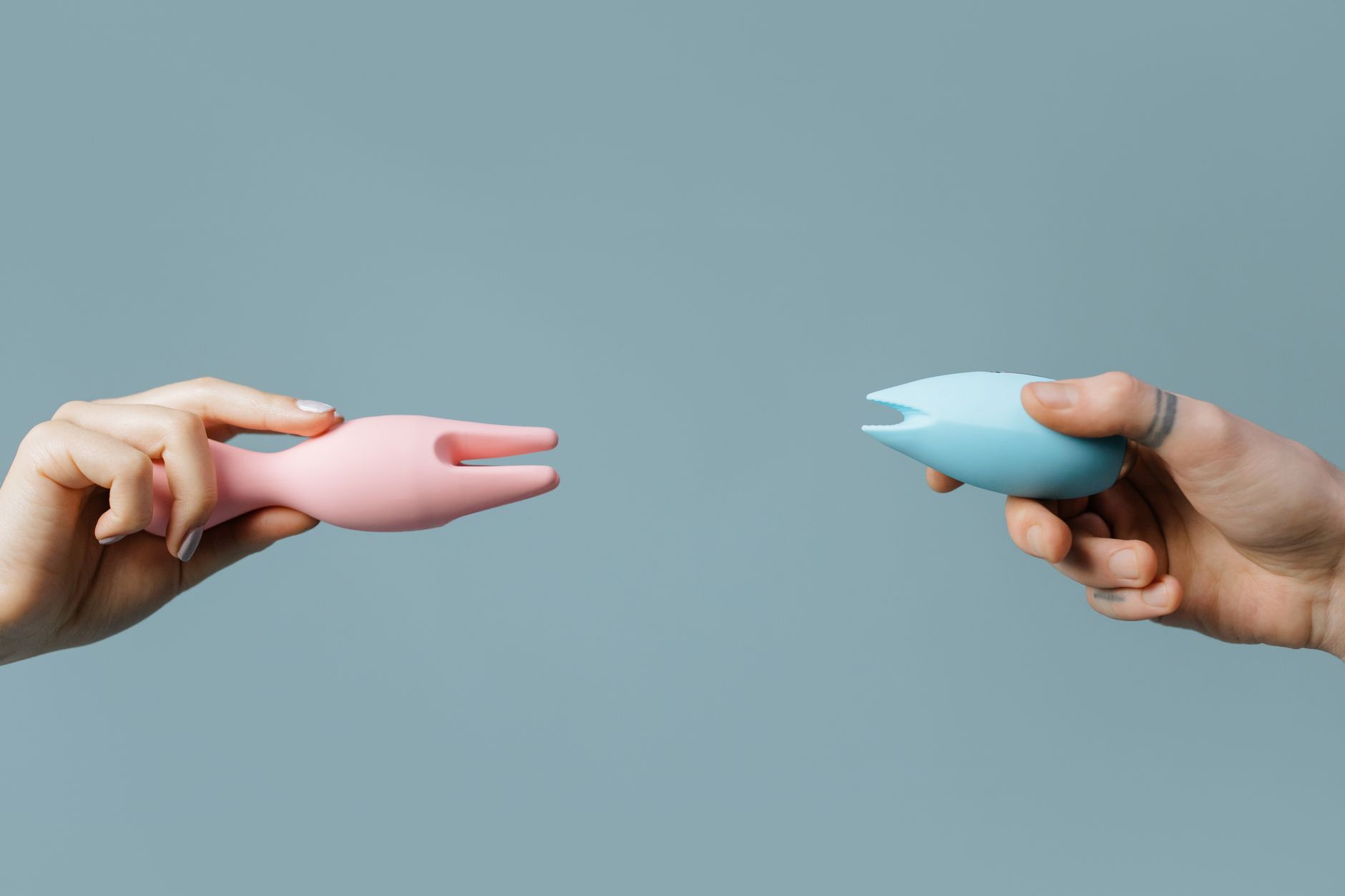
How to Use a Lemon Vibrator When Penetration Causes Pain With a Partner
Pain during penetration doesn't end your sex life. Here's how to redirect pleasure, keep emotional connection alive, and find what actually works for both of you.
If sex hurts, you stop having sex. Not because you don't want to. Not because your relationship is broken. But because your body is sending a pretty clear signal: this isn't working right now. And here's the part that matters: that signal is not a dead end. It's a redirect.
Most couples I work with assume penetration pain means they need to fix penetration. They stretch, they try different angles, they white-knuckle through it. What they actually need is permission to try something else entirely.
That's where clitoral vibrators come in. And I'm not talking about "using it instead of sex forever." I mean building a whole new rhythm together where penetration doesn't have to happen, where pleasure still happens for both people, and where the pain actually stops being the centerpiece of the conversation.
Penetration pain has real causes. Vulvodynia, endometriosis, vaginismus, pelvic floor tension, hormonal shifts, scarring from childbirth, medication side effects. Some of these need medical attention. Some respond to physical therapy. Some shift with time.
But here's what's important: all of them respond better when you're not grinding through pain every time you have sex.
When penetration hurts, your nervous system learns to brace. Your pelvic floor tightens preemptively. Arousal becomes harder to access because your body is in defense mode. You start avoiding sex because your brain connects it with pain. Your partner starts avoiding sex too because they don't want to hurt you. And suddenly the whole emotional intimacy piece starts deteriorating alongside the physical piece.
Clitoral vibrators like the Lem break that cycle because they offer pleasure that doesn't require the thing that hurts.
The Lem uses suction stimulation instead of friction or pressure. That matters because:
First, suction doesn't irritate tissue the way penetration or traditional vibration can. If you've got inflammation or sensitivity, the gentle pulse of suction feels good instead of creating more pain signals.
Second, suction is focused. You control exactly where the stimulation is, at exactly what intensity. No compromise, no "well your partner needs something different," no switching positions to try to make it work for both people at once.
Third, clitoral vibrators offer real pleasure without any penetration happening. That's the key unlock. Your partner can be involved, touching you, watching, participating. But the main event doesn't require the thing that's broken.
This is the conversation that determines whether this actually helps or whether it feels like a workaround that builds resentment.
Don't lead with the toy. Lead with the truth: "Penetration is causing me pain. I want to keep having sex with you. But we need to find a way that doesn't hurt me." That's the whole conversation. You're not saying "I don't want you." You're saying "I want us, and I want it to feel good."
Then show them what you're thinking. "I've been reading about clitoral vibrators. They're designed for external stimulation, which means we can have sex together without the penetration part that's causing pain. I'd like to try it."
If your partner pushes back on using toys, that's a different conversation. But most partners, when they understand that the alternative is "we don't have sex at all," are actually relieved to have a path forward.
You need three things: time, comfort, and zero rush.
Set aside at least 45 minutes. Not because you need all of it, but because you need permission to explore without watching the clock. Penetration pain creates time pressure because you're both thinking about when it might hurt. Removing the clock removes half the anxiety.
Get comfortable. Pillows, blankets, a room temperature that feels good. If you've been in pain-avoidance mode, your nervous system is already on high alert. Make the environment as relaxing as possible.
Start without the toy. Touch each other, kiss, build arousal the way you normally do. The Lem isn't a shortcut to pleasure. It's an enhancement to pleasure. You still need the buildup, the connection, the warmth.
When you're aroused, introduce the Lem. If you usually go straight to penetration because it feels like "the main event," this is where the mental shift happens. The Lem becomes the main event. Penetration might happen afterward, might happen in a different way, might not happen at all. All of those are fine.
Start on pattern one or two. Low, gentle, focused. Your partner can watch, or they can touch you in other ways at the same time. Some couples like simultaneous stimulation, hands and toy. Some like taking turns focusing on one person.
Take your time building intensity. This isn't about rushing to orgasm. It's about proving to yourself that you can feel good with this person without pain.
If you want penetration at some point, you can. But notice that the Lem has already given you pleasure. Penetration is now optional, not mandatory. And when something's optional, the pressure lifts. When the pressure lifts, sometimes your body relaxes enough that penetration actually feels okay. Sometimes it doesn't. Both are wins.
The first time you have pain-free sex, it might feel emotional. That's normal. You've been bracing for pain, anticipating pain, managing around pain. When it's just pleasure, the relief can actually bring tears.
Your partner might have feelings too. If they've been worried about hurting you, or frustrated by the limitation, or feeling rejected by the avoidance, having a "win" where everyone feels good can shift the whole dynamic.
But here's what I also want to name: this doesn't fix the original pain. If you have vulvodynia or endometriosis or vaginismus, clitoral vibrators make your sex life functional right now, but you probably still need medical support to address the underlying issue. The Lem is a beautiful tool for living well in the meantime.
If penetration hurts, you deserve to know why. A pelvic floor physical therapist can assess whether the pain is neurological, muscular, or tissue-based. A gynecologist trained in vulvology can diagnose conditions like vulvodynia or vestibulitis.
Meanwhile, the Lem lets you have an active, pleasurable sex life. You're not waiting in pain-free limbo while you figure out the medical piece. You're actually living.
Some couples find that once they start having good sex with the Lem, and the nervous system relaxes out of pain-avoidance mode, penetration becomes less painful. The psychological pressure releases. The body follows.
If your partner is worried about being replaced or about the toy being a sign that something's wrong with your relationship, here's what actually helps: "This is how we get to keep having sex together. This is how we solve the problem instead of just suffering around it. I want you. I want us. This is how we make that work."
That's it. You're not trying to convince them that toys are great or modern or whatever. You're saying: penetration hurts, we love each other, here's the path forward. Most partners get it immediately.
Clitoral vibrators aren't a Band-Aid for a broken relationship. They're a practical solution to a physical problem. And in my experience, couples who are willing to actually problem-solve together, who communicate about what they need instead of just suffering, usually find their way back to real intimacy faster than those who don't.
Yes, absolutely. The Lem is external, so you can use it during penetration if that feels good. Many couples find that the added clitoral stimulation makes penetration feel better because there's more pleasure and less pressure on penetration to be the whole experience. Start slow and pay attention to what feels good.
Only if you frame it that way. If you introduce it as "here's how we solve this problem together," most partners feel relieved and more connected, not less. The goal is pleasure that includes both of you, even if the toy is involved. That's not replacement. That's teamwork.
That depends on the cause. If it's tension-based, sometimes just removing the pressure helps immediately. If it's a medical condition, you might be using the Lem long-term while you work with a pelvic floor PT. Both are fine. The point is you get to have a good sex life right now, not six months from now when the problem is solved.
Then you have a conversation about what you both actually want. Because right now you have penetration pain and no solution. He doesn't want toys. Those two things can't both be true indefinitely. Either the pain gets medical attention, or you find a different way to have sex, or you accept that penetration isn't happening for a while. A good partner will work with you on one of those three, even if toys weren't their first choice.
I think that's smart. Get comfortable with how it feels, figure out what patterns you like, understand your own pleasure first. Then introducing it with your partner becomes less about "let's try this foreign object" and more about "here's something I enjoy, let's explore it together."
Both things can be true. Some penetration pain resolves with the right medical care and physical therapy. Some is something you manage long-term with different techniques, toys, positions, or communication. The Lem isn't a cure. It's a way to have a full, pleasurable sex life while you're working on the cure, or while you're learning to live well with whatever the underlying issue is.