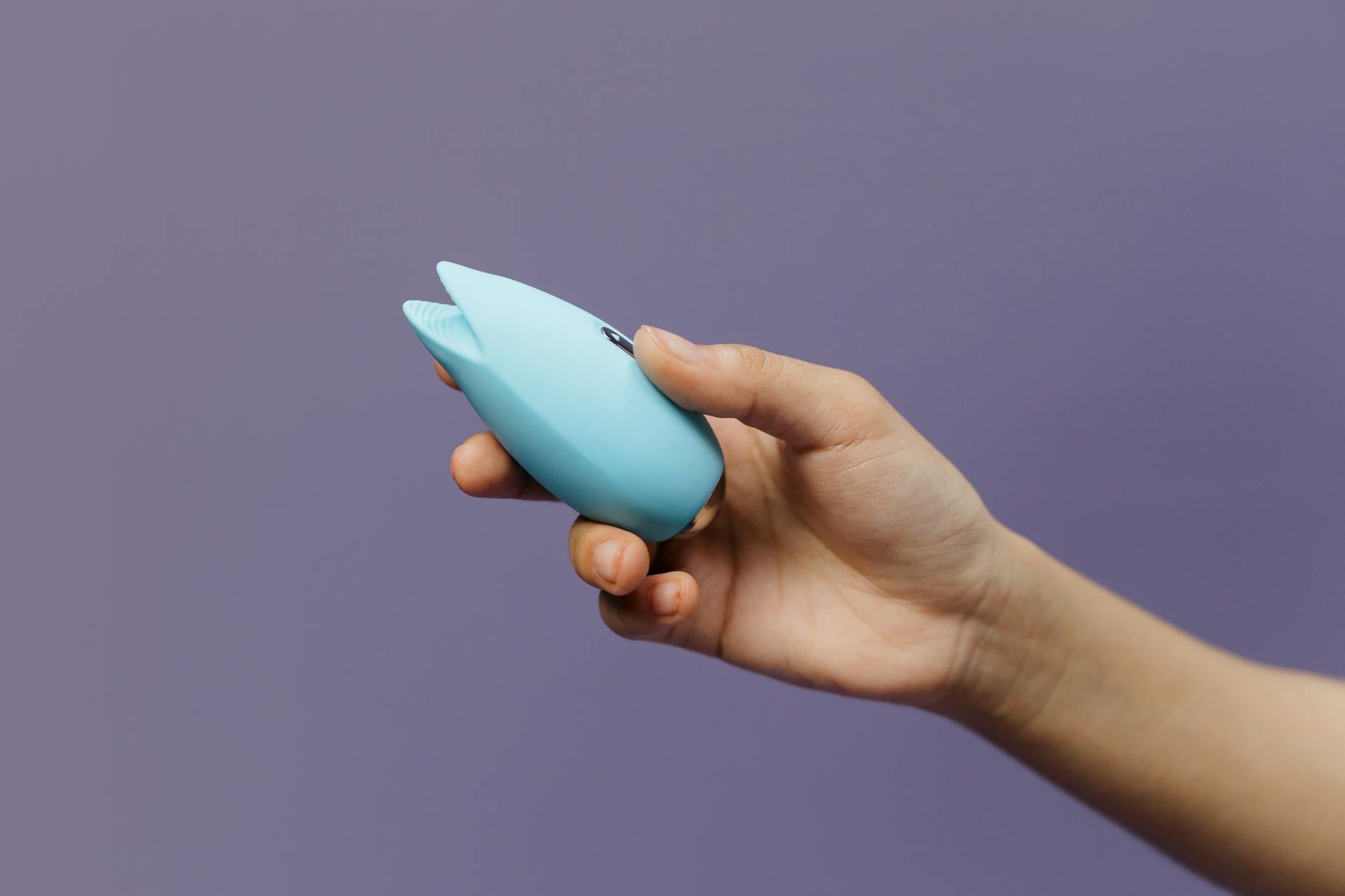
Anxiety doesn't just ruin your day. It colonizes your body. When your nervous system is in overdrive, pleasure becomes nearly impossible. Your brain loops through worries, your chest tightens, and suddenly the idea of being present enough to feel anything sexual seems laughable. A lot of people assume this means their lemon vibrator won't work for them. That's backwards. It's usually the opposite.
Your nervous system has two main states: sympathetic (fight-flight-freeze) and parasympathetic (rest-digest-connect). Arousal lives in the parasympathetic state. Anxiety lives in sympathetic overdrive. You literally cannot be in both states at once. So when your mind is racing through worst-case scenarios or replaying conversations, blood flow leaves your genitals and pools in your muscles and brain. Your clitoris becomes less responsive. Lubrication slows. Sensation dulls.
This is not a personal failure. This is neurobiology.
The second layer: anxiety makes people mentally absent. Even if your body could respond, your mind has already fled the room. You're performing pleasure or chasing it instead of actually feeling it. A lemon clitoral vibrator can interrupt that loop because suction stimulation is strong enough to cut through the noise and anchor you to physical sensation. It's not magic. It's just that the intensity of the input can override the anxiety chatter. But only if you set it up right.
Don't jump straight to the lemon vibrator. Your nervous system needs permission to shift first. Try this sequence about 15 minutes before you want to use your vibrator.
Box breathing: Breathe in for four counts, hold for four, exhale for four, hold for four. Repeat five times. This is clinical shorthand for "tricking your parasympathetic nervous system into activating." It works. It works fast.
Progressive muscle release: Tense your feet hard for five seconds, then release. Move up through your calves, thighs, glutes, lower back, abs, chest, shoulders, neck, and face. The point is that release feels different from baseline when you've first created tension. Your body recognizes the shift.
Environmental control: Kill the overhead lights. Use a table lamp or nothing. Temperature matters. If you're cold, your body stays defensive. Warm blankets or a warm room signals safety. Silence or white noise. No phone in reach. No part of your attention goes to the outside world.
This isn't luxury. It's creating conditions where your nervous system can actually stand down.
Start on the lowest setting. Most people with anxiety want to jump straight to intensity because they think more stimulation will drown out the thoughts. That's exactly backwards. High intensity combined with anxiety often just sharpens the anxiety. You're adding arousal to an already elevated nervous system.
Instead, settle into pattern one or two on your lemon vibrator. Your clitoral nerve has 8,000 receptor points. It doesn't need to be pounded to be stimulated. Suction toys are brilliant here because the sensation is sustained and circular rather than jarring.
The key move: when a racing thought appears, don't fight it. This sounds counterintuitive, but notice it like you're watching a cloud pass overhead. "There's that worry. It's real. I'm choosing to feel this physical sensation anyway." This is basic acceptance-based anxiety work. You're not trying to achieve a blank mind. You're practicing tolerating thoughts while staying in your body.
Let your lemon vibrator be the anchor. Feel the suction. Feel the shape. Feel where it makes contact. The more specific your physical attention, the less bandwidth your brain has for anxiety spirals.
Don't try this when you're in peak anxiety mode. If you're mid-panic attack or in the thick of rumination, your nervous system is too dysregulated. You'll fail and then feel worse about yourself for failing. That's a lose-lose.
Instead, use your lemon vibrator during the window where anxiety is present but manageable. Maybe it's 20 minutes after your breathing work. Maybe it's early morning before the day's stress accumulates. Maybe it's right after a workout when your body chemistry is already shifted.
Context also matters. If anxiety is tied to body image, being naked might be the wrong move. Use your vibrator over underwear. If anxiety is tied to performance pressure in a relationship, this is a solo thing. <a href="/blog/how-to-use-lemon-vibrator-with-your-partner-without-awkward-conversation">Using a lemon vibrator with your partner without the awkward conversation</a> is a different skill set. Right now, the goal is to reconnect with solitary sensation without an audience.
Your anxious brain loves predictability. Random attempts to feel pleasure when you're triggered usually backfire. Instead, build a small ritual that happens at the same time, the same way, with the same environment. Your nervous system learns: "This is a safe space. This is allowed."
Maybe it's Tuesday and Thursday evenings. Maybe it's Sunday morning. Maybe it's specifically after you finish a meditation or go for a walk. The repetition is what teaches your body to anticipate safety rather than danger.
Include a transition object. Some people light a specific candle. Some change into a specific piece of clothing. Some play a particular playlist. The object doesn't matter. The consistency does. Within a few weeks of repetition, your parasympathetic nervous system will start downshifting the moment you begin the ritual. The lemon vibrator becomes the final step, not the first desperate attempt.
If anxiety is crushing everything, including your ability to focus, sleep, or function at work, pleasure is not your actual problem right now. Anxiety is. This is the moment to see a therapist or your GP. Anxiety-focused CBT is evidence-based and often effective. SSRI medication opens up space in your nervous system that pleasure can actually occupy. You're not weak for needing help. You're practical.
Once you've got better anxiety management tools in place, your lemon clitoral vibrator becomes a beautiful add-on, not a desperate life raft. <a href="/blog/why-lemon-vibrators-feel-different-when-youre-on-antidepressants">How your lemon vibrator works with antidepressants</a> is actually a useful read if you're navigating medication and sensation together.
Here's the biggest mindset shift: stop trying to achieve pleasure and start using your lemon vibrator as a somatic anchor. Pleasure will or won't happen. That's fine. The real win is five minutes where your anxious brain isn't in charge of your body. That's not nothing. That's a revolution.
When you remove the pressure to orgasm, to feel a particular thing, or to "succeed," your nervous system relaxes enough to actually notice sensation. And paradoxically, that's usually when pleasure shows up. Not because you chased it. Because you stopped running from your anxiety and instead invited your body back into the conversation.
Yes, but with care. Panic disorder means your nervous system is hypersensitive to bodily sensations. A vibrator that feels grounding to one person might feel threatening to someone in a panic state. If you have panic disorder, work with a therapist first to build your somatic tolerance. Start with gentler tactile sensation. Touch your skin. Use warm water. Let your nervous system learn that body sensations are safe. Then introduce your lemon vibrator at very low intensity, in a super safe environment, with an exit strategy nearby. The goal is not pleasure. The goal is learning that sensation doesn't have to mean danger.
Timing depends on the medication. SSRIs or SNRIs don't create a sexual window, but they may take 2-4 weeks to calm anxiety enough that pleasure becomes possible again. Don't use your vibrator as a test of whether the medication is working. Instead, use it as part of your overall grounding practice once you've noticed anxiety settling. If you're on benzodiazepines, the window is usually 30 minutes after taking it as anxiety peaks then settles. Talk to your prescriber about your specific medication. They'll give you better guidance than any post.
Stop. Your body is telling you this isn't the right time or approach. Don't push through. Instead, step back. Do a grounding exercise: name five things you see, four you can touch, three you hear, two you smell, one you taste. This resets your nervous system faster than trying to force pleasure. Then take a break for a few days. When you retry, use even lower intensity and a longer wind-up period. If anxiety consistently spikes when you use your vibrator, that's a signal to work with a therapist on somatic safety first.
Absolutely. Performance anxiety is its own beast. The moment you start thinking "I should be turned on by now" or "This should feel better," you've exited your body and moved into judgment. The fix is the same: acceptance. You're anxious. That's real. Feel the vibrator anyway. Notice what you notice without rating it. Performance anxiety feeds on judgment. It starves on acceptance.
No. They work in different systems. Medication addresses the underlying anxiety. A vibrator is a tool for reconnecting with sensation once anxiety is more managed. The best answer is usually both: work on the anxiety with professional help, and use pleasure tools like your lemon vibrator as part of rebuilding embodiment. Neither alone will fix anxiety. Together, they're a real solution.
Most people notice a shift in 3-4 weeks of consistent practice. Not because the vibrator is magic, but because your nervous system learns through repetition that this context is safe. You're essentially retraining your threat-detection system. That takes time. Some people feel difference faster. Some take longer. The variable is how deeply embedded the anxiety is. Trauma-based anxiety takes longer. Free-floating stress anxiety sometimes shifts faster. Consistency matters more than speed. Show up twice a week for a month and you'll feel the difference. Promise.
Anxiety creates a feeling of disconnection from pleasure. It feels like your body has abandoned you. It hasn't. Your nervous system is just doing its job too aggressively. A lemon vibrator is a permission slip to come home to sensation. Not to feel amazing. Not to hit some pleasure milestone. Just to touch down in your own body for a few minutes and remember that you're safe enough to feel good. That's the real work. Everything else builds from there. When you're ready, <a href="/contact">get in touch</a> with questions about any piece of this.