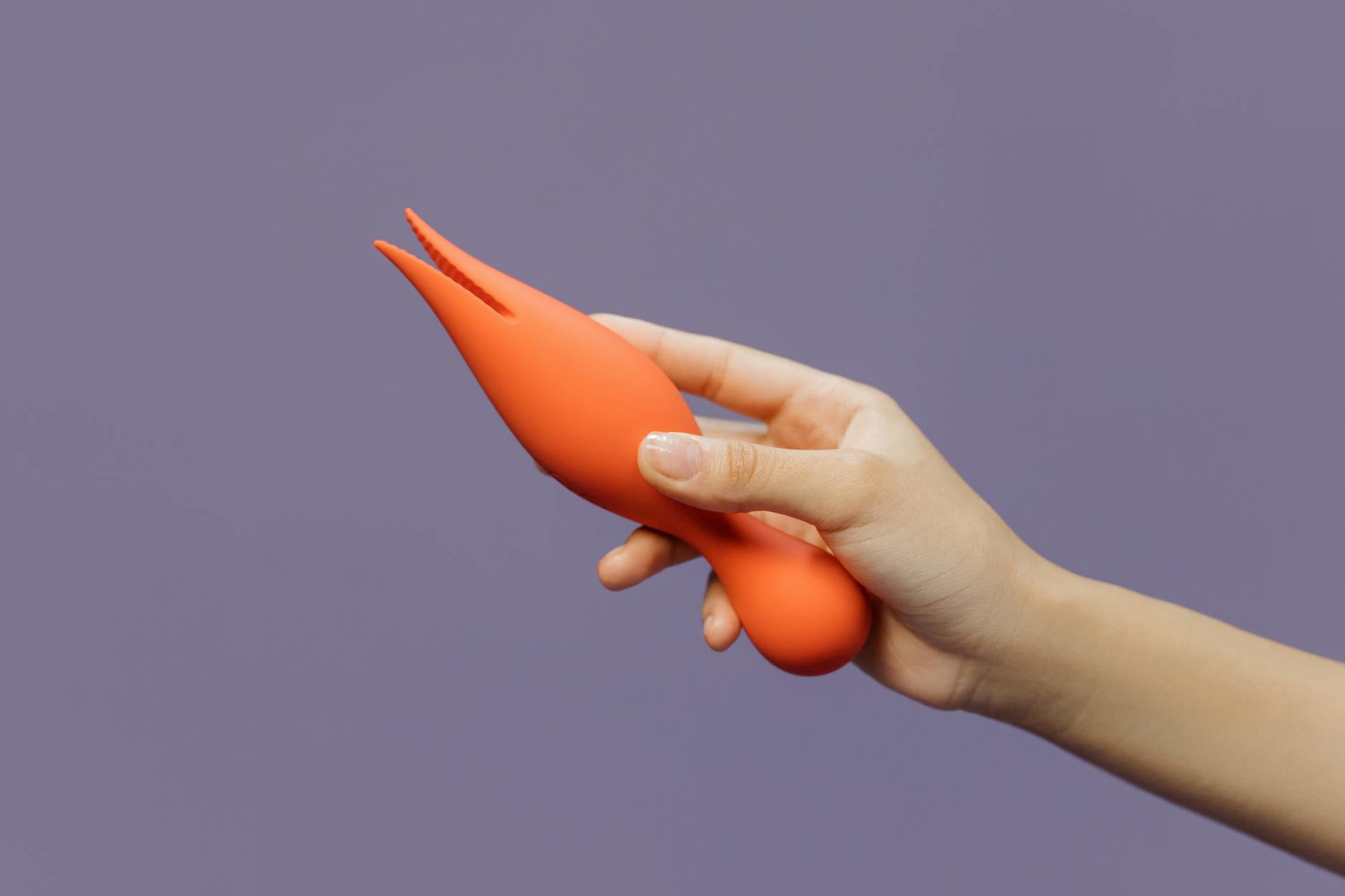
How to Use a Lemon Vibrator With Your Partner When Communication Feels Stuck
The conversation you've been avoiding might be easier with a lemon clitoral vibrator as your opening move. Here's how to introduce pleasure without the awkward setup.
Most partners don't avoid talking about toys because they don't want pleasure. They avoid it because the conversation itself feels like a minefield. Bringing it up sounds like "I'm not satisfied" or "You're not enough." It feels like criticism dressed up in sexy language. So nothing gets said, and both people stay quietly frustrated.
That's where a lemon clitoral vibrator changes the game. Not as a fix for your relationship. But as a conversation starter that bypasses all the defensive language and gets straight to "I want to explore this with you."
I work with couples every day who've been stuck in this exact place. The good news: introducing toys doesn't require a big relationship talk first. Sometimes the toy itself is the talk.
Let's look at what's actually happening when a couple can't talk about sex. Usually it's one of three things.
First, there's the vulnerability problem. Asking for what you want sexually feels like admitting you've been faking it or that something's been missing. If your partner doesn't know you've been quietly unsatisfied, suddenly telling them about a toy feels like a confession. The guilt trap springs immediately.
Second, there's the rejection fear. If you suggest a toy and your partner says no, it feels personal. Even though it's almost never about you. It's about their own insecurity, their ideas about what normal sex looks like, or their fear that needing a toy means they're not sexy enough. But that's a lot to unpack in a conversation you're already nervous about.
Third, there's the framing problem. Most people don't know how to talk about toys without sounding like they're complaining. "I want to use a toy" can land like "This isn't working anymore." Even though what you're really saying is "I want to feel more." The translation gets lost.
A lemon vibrator is a way to sidestep all three of those problems at once.
The lemon vibrator has a specific advantage in stuck couples: it's not a criticism of what's not working. It's a concrete object that exists outside the relationship, so it feels less personal.
When you hand someone a toy versus telling them you need something different, the defensive response is lower. You're not saying "You can't give me this." You're saying "Let's try this thing together." It's collaborative instead of corrective.
Also, pleasure is often easier to talk about through action than through words. I've had clients who couldn't say the word orgasm sit comfortably while their partner learned how a lemon vibrator works on their body. The talking came after, once the pressure was off.
A vibrator also lets you show rather than tell. If your partner doesn't know what kind of sensation you're drawn to, a lemon clitoral vibrator demonstrates it. You're not guessing at explanations anymore. The experience is right there.
Don't plan the conversation. That almost never works.
Instead, introduce the toy casually, privately, outside the bedroom. Show it like you would any product you've researched. "I got this and I want to try it with you. Want to see how it works?" Framing matters. You're not asking permission. You're proposing an experience.
Timing is everything. Don't ambush your partner right before sex or when either of you is tired or stressed. You want at least 30 minutes with no distractions. No phones, no interruptions, no audience anxiety.
If your partner seems hesitant, don't push. Just leave it sitting there. Say, "No pressure. Just thought we could explore it together whenever you're curious." Sometimes the toy needs to sit in your nightstand for a week before your partner gets curious. That's fine. You've already normalized it.
When you do use the lemon vibrator together, manage expectations. The first time isn't about fireworks. It's about information.
Start with the lower intensity settings. Show your partner how to hold it, where the sensation is strongest, how to use it on you first. Let them feel the vibration in their hand before it touches your skin. That small gesture dissolves a lot of anxiety. They're not guessing anymore. They understand the tool.
Talk during this, but keep it simple. "That feels good," or "Try it a little higher," or "A tiny bit lower." You're giving real-time feedback. Your partner isn't trying to read your mind.
Many couples report that this shared focus is the real win. For the first time, you're both paying attention to the same thing. There's no performance pressure. No wondering if you're doing it right. Just sensation and feedback.
Sometimes even a low-pressure introduction doesn't land. Your partner might say they think toys are weird, or unnecessary, or that they feel replaced. These are real feelings worth listening to.
The difference is that now you have something concrete to talk about instead of abstract fears. You can say, "I'm not trying to replace you. I want to feel more with you. This just helps me get there." The lemon vibrator becomes the focus of the conversation instead of your relationship problems.
If resistance continues, let it go for now. You've planted the seed. Sometimes partners come around weeks or months later, after they've had time to sit with the idea. The worst thing you can do is push.
But be honest with yourself about what's driving the resistance. If it's genuine discomfort, that's worth respecting. If it's control, or insecurity that your partner isn't willing to work on, that's a different conversation. One that might need a therapist, not a vibrator.
If that first experience goes okay, use it again. Not every time you have sex. Just when you both feel like exploring.
Over time, something shifts. The toy stops being a big deal and becomes just part of your sexual toolkit. Like condoms or lube. That normalization is what you're actually after.
More importantly, you've now practiced talking about pleasure together. You've shown each other what you like. You've made requests and received feedback without anyone getting defensive. That skill transfers to everything else.
I've seen couples who've used a lemon vibrator together find it easier to ask for other things. A different rhythm. A specific touch. A conversation about wanting more frequency. The toy wasn't the fix. But it gave you both permission to talk.
If you've introduced a toy and your partner's response is anger, shame, or withdrawal that lasts more than a day or two, something deeper is happening. That might be a sign you need a real conversation with a couples therapist.
Same if the conversation reveals that one of you is really unhappy sexually and a vibrator was never going to fix that. Toys are great. But they're not a substitute for addressing actual incompatibility or poor communication patterns.
A good therapist can help you both talk about pleasure without it turning into blame. That's a skill worth learning.
That anger usually isn't about the toy. It's about feeling surprised or judged or like you've already made a decision without them. Pause. Ask what scared them. Don't defend the toy. Just listen. Sometimes people need to process before they can engage.
Absolutely. In fact, this is often a great first step. It shows your partner how the toy works without putting pressure on them to do anything. Watching you experience pleasure is sometimes less threatening than direct participation. And it lets your partner get curious at their own pace.
That's vulnerable, which means it's important. Let them try. Give feedback. If it doesn't feel good, say so. If it does, say that too. You're teaching each other. That process itself is where the connection lives.
If your main issue is that you've never talked about what you each want, a toy can help you start that conversation. But if the problem is deeper, like one of you doesn't actually want to be together, a toy won't fix that. Be honest about what you're actually trying to address.
Both work. Shopping together can feel playful and collaborative. Buying alone and surprising your partner can feel more relaxed, less like a big negotiation. Whatever feels less awkward to you is the right choice.
Then the toy worked as a conversation starter but not as a relationship fix. That's okay, but you might need to take the next step. Ask your partner to tell you what they enjoyed. Build from there. A toy can open a door, but you both have to walk through it.
A lemon clitoral vibrator isn't relationship therapy. But it can be the beginning of better communication about pleasure, which makes everything else easier to talk about.
The bravest thing you can do with a partner isn't always to have the big conversation. Sometimes it's to introduce a tool that says, "I want to feel good, and I want you here for that." That's not a complaint. It's an invitation.
If you're ready to try, start small. Introduce it casually. Show, don't tell. And give your partner permission to take their time. The rest follows.
Questions about this? Reach out. We're here to help couples navigate intimacy, one conversation at a time.