How to Use a Lemon Vibrator When SSRIs Dull Your Pleasure Response
Your antidepressant isn't broken. Your pleasure isn't gone. But the pathway to sensation has shifted. Here's how lemon vibrators and strategy work together.
You start an antidepressant. Your mood lifts. Your anxiety drops. Your sleep stabilizes. And then, somewhere around week three or four, you notice something else has shifted. Pleasure doesn't hit the same way. Arousal takes forever. Orgasm feels like chasing a shadow.
This isn't you. It's not a sign the medication is wrong or that your body is broken. It's a documented, predictable side effect of how SSRIs work. And I want to be direct: most doctors mention it in passing, if at all. That's a failure on their end, not yours.
Here's what's actually happening, and why lemon vibrators change the math.
SSRIs work by increasing serotonin availability in your brain. That's why they're so good at treating depression and anxiety. But serotonin also regulates sexual response. Higher serotonin in certain brain circuits dampens the urgency of desire and blunts the intensity of orgasm.
This happens to somewhere between 40 and 60 percent of people taking SSRIs. It's not rare. It's not in your head. It's neurology.
The physical sensation is usually still there. Your vulva hasn't lost nerve endings. Your clitoris is still there. But the signaling pathway between sensation and pleasure has gotten noisier, like trying to hear someone whisper in a crowded room.
Many people try to push through. Longer foreplay. Kegels. Focusing harder. All of that makes sense and none of it usually works, because you're not fighting a willpower problem. You're fighting a neurochemical one.
A lemon clitoral vibrator uses suction and pulsation rather than simple vibration. That matters because suction creates a consistent, broad stimulation across the entire clitoral complex. It's not relying on you to achieve arousal first.
Here's the distinction: finger stimulation and most vibrators require your body to already be in a state of heightened arousal to feel good. When you're on an SSRI, that heightened arousal state is the part that's dampened. You're working backward.
The Lem and similar clitoral suckers bypass that. They create sensation directly. They don't wait for your nervous system to cooperate. You start at sensation and work toward pleasure, not the other way around.
This is why people on SSRIs often report that suction toys produce their first genuine orgasm since starting medication. It's not coincidence. It's biomechanics.
When SSRI numbness is active, timing your pleasure becomes strategic instead of spontaneous. I know that sounds clinical. It's not. It's just honest.
SSRI levels in your bloodstream peak and trough throughout the day depending on when you take your dose. Most people take SSRIs in the morning. That means the middle of your day and early evening typically have slightly lower concentrations in your system. Not low enough to stop working, but lower enough that sensation is less muted.
If you've been trying to have pleasure in the evening or right before bed, experiment with earlier in the day. Many of my clients find that afternoon or early evening works better than late night.
This is also why consistency matters more than spontaneity when you're on medication. A scheduled 20-minute session with your lemon vibrator will often produce better results than waiting for the mood to strike randomly.
If you've been on your current SSRI dose for six months or longer and the numbness is still severe, this is worth raising with your prescriber. A few options exist that don't require switching medications.
Some doctors add a secondary agent like bupropion (Wellbutrin) in a lower dose, which works through a different mechanism and can restore some sensation. Others shift the timing of the dose. Taking an SSRI at night instead of morning, or vice versa, can sometimes help by shifting when peak levels coincide with your intimate time.
Occasionally, people benefit from a small dose reduction, though that's a conversation for your doctor, not something to do on your own.
The point: before assuming this is permanent or unchangeable, ask your prescriber directly. Most people don't ask. Most prescribers don't offer. That's a gap worth closing.
Start with a lower intensity than you think you need. People assume they need maximum power to feel anything. Usually the opposite is true. On SSRIs, your nervous system needs gentler input to register sensation without overwhelming.
Begin at level 2 or 3. Spend 3-5 minutes there before escalating. Pay attention to the sensation changing, not searching for a specific feeling you remember. That distinction is important. You're relearning your body's signal path, not trying to recreate your pre-medication baseline.
Use a water-based lubricant. Even if you're producing natural lubrication, a slick surface helps the suction create stronger, more consistent stimulation. It reduces the friction your body has to work against.
Budget 25-35 minutes, not 10. SSRI-medicated bodies take longer to build toward orgasm. That's not a flaw. It's just the timeline. Accepting that removes the pressure that usually kills sensation entirely.
Here's what most articles about SSRIs and pleasure get wrong: they treat it as purely physical. It's not. Your mental state, your attention, and your stress level directly influence how your medication affects sexual response.
When you're anxious about whether you'll feel anything, your nervous system responds by dampening sensation further. Anxiety and SSRIs are a tag team against pleasure.
Before you start, spend five minutes grounding yourself. Feel your feet on the floor. Notice what you hear. Name three things you see. This isn't woo. This is nervous system downregulation. You're literally telling your body it's safe to feel.
During your session, if your mind drifts to "am I feeling this," gently come back to the sensation itself. Describe it in real time. "This is warm. This is pulsing. This is rhythmic." Labeling sensations keeps your brain in the present moment and prevents the anxiety spiral that kills response.
If you've been on the same SSRI for a year, you've optimized timing, you've tried the strategies here, and pleasure is still completely flatlined, it might be worth discussing alternatives with your prescriber.
Not all SSRIs affect sexual function equally. Sertraline (Zoloft) and paroxetine (Paxil) tend to have more sexual side effects than escitalopram (Lexapro) or citalopram (Celexa). Some people tolerate bupropion or certain SNRIs better.
But here's the thing: switching medication is a real medical decision with real trade-offs. Your mental health matters more than your sex life. Don't frame it as an either-or. Frame it as: "Are there alternatives that work as well for my mood but with fewer sexual side effects." Your prescriber can help answer that.
If you're in a relationship, this conversation needs to happen outside the bedroom first. Your partner needs to understand that slower pleasure, the different timeline, and the need for tools like lemon vibrators isn't a rejection of them. It's a collaboration with medication.
Many partners actually find this liberating. It removes the pressure to produce spontaneous desire. It makes pleasure intentional instead of automatic. Some couples say their sex life improved after switching to a more strategic approach.
Your partner can absolutely be part of this. Using a lemon clitoral vibrator together during partnered sex changes the dynamic in ways that often deepen connection. You're not doing something instead of being together. You're doing something that works for your current reality.
Yes, though the effect might be stronger. If you're on an SSRI plus another serotonergic medication, your numbing might be more pronounced. Start with even lower intensity settings. Keep a journal of what works so you can show your prescriber the pattern.
Sexual side effects usually improve within 2-4 weeks if something changes (timing adjustment, added agent, dose change). But your nervous system needs time to recalibrate. Give yourself at least 6 weeks before deciding if a change worked.
Completely normal. Your SSRI levels fluctuate slightly based on food, hydration, stress, and sleep. Days when you're well-hydrated and rested, sensation often feels sharper. That's not the vibrator changing. That's your body's baseline shifting.
You can. Many people find that combining a lemon clitoral vibrator with internal stimulation, a partner's touch, or mental focus techniques actually helps restore sensation. Variety keeps your nervous system engaged. Just remember that more sensation doesn't always equal more pleasure on SSRIs. Depth often works better than intensity.
Some people notice improvement after their body adjusts to medication, usually after 3-6 months. Others find it's consistent for as long as they're on the drug. Both are normal. The goal isn't waiting for things to return to baseline. It's learning your new baseline and working with it.
I'd reframe the conversation. Tell your doctor you're experiencing sexual numbness and ask about options. If you've found tools or strategies that help, mention those. Most prescribers are genuinely interested in whether patients are managing side effects successfully. You're providing useful data, not confessing something weird.
SSRIs flatten pleasure. That's real. That's documented. That's not your fault or your body's fault. But it's also not permanent or unchangeable. Lemon vibrators work for SSRI numbness specifically because they create sensation without requiring your arousal system to cooperate first. Timing matters. Strategy matters. And having honest conversations with your prescriber about whether your current medication is still the right choice matters too.
Your mental health and your pleasure both deserve attention. They're not in competition. They're both part of what it means to feel alive in your own body.

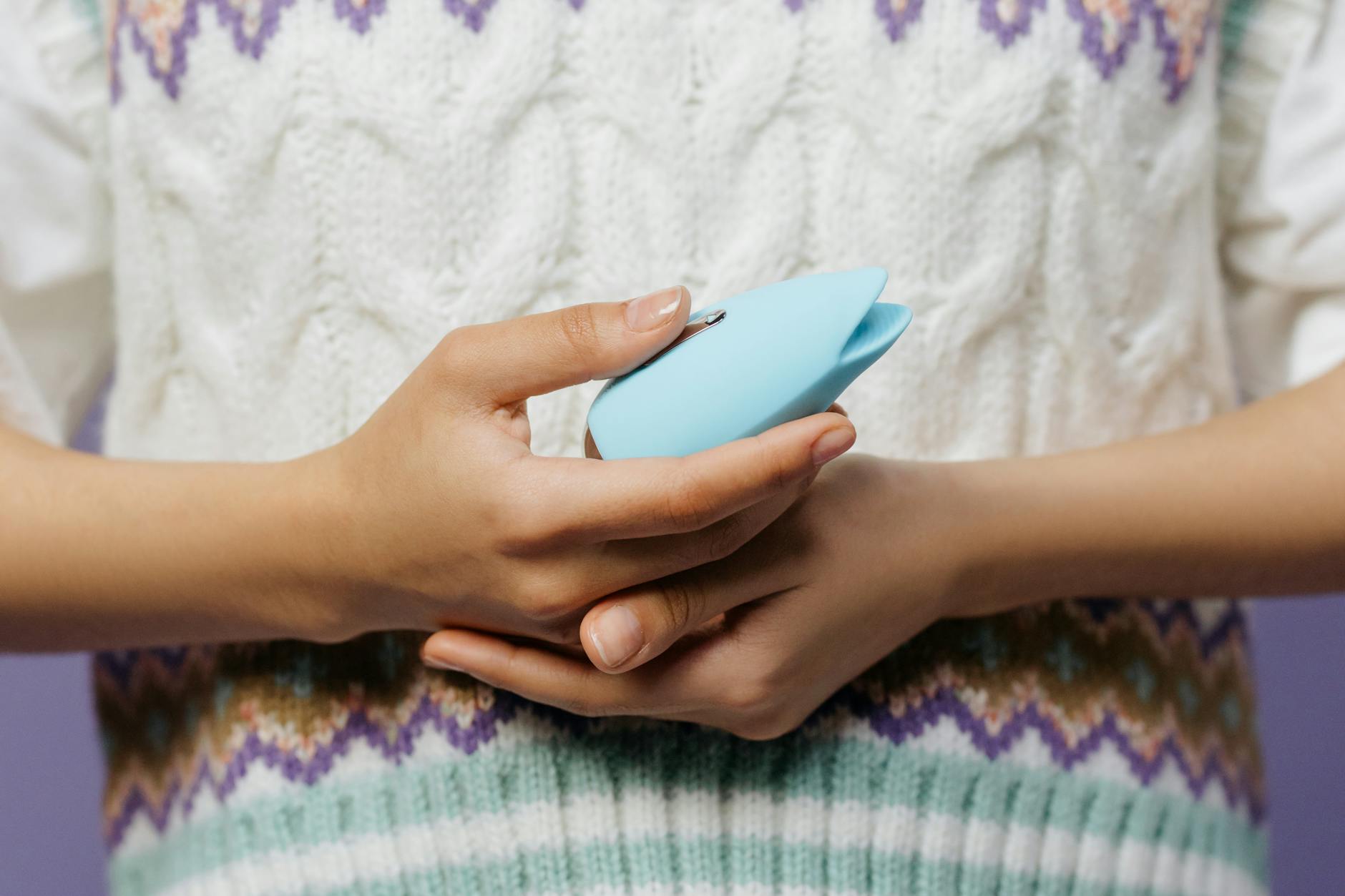 Photo by