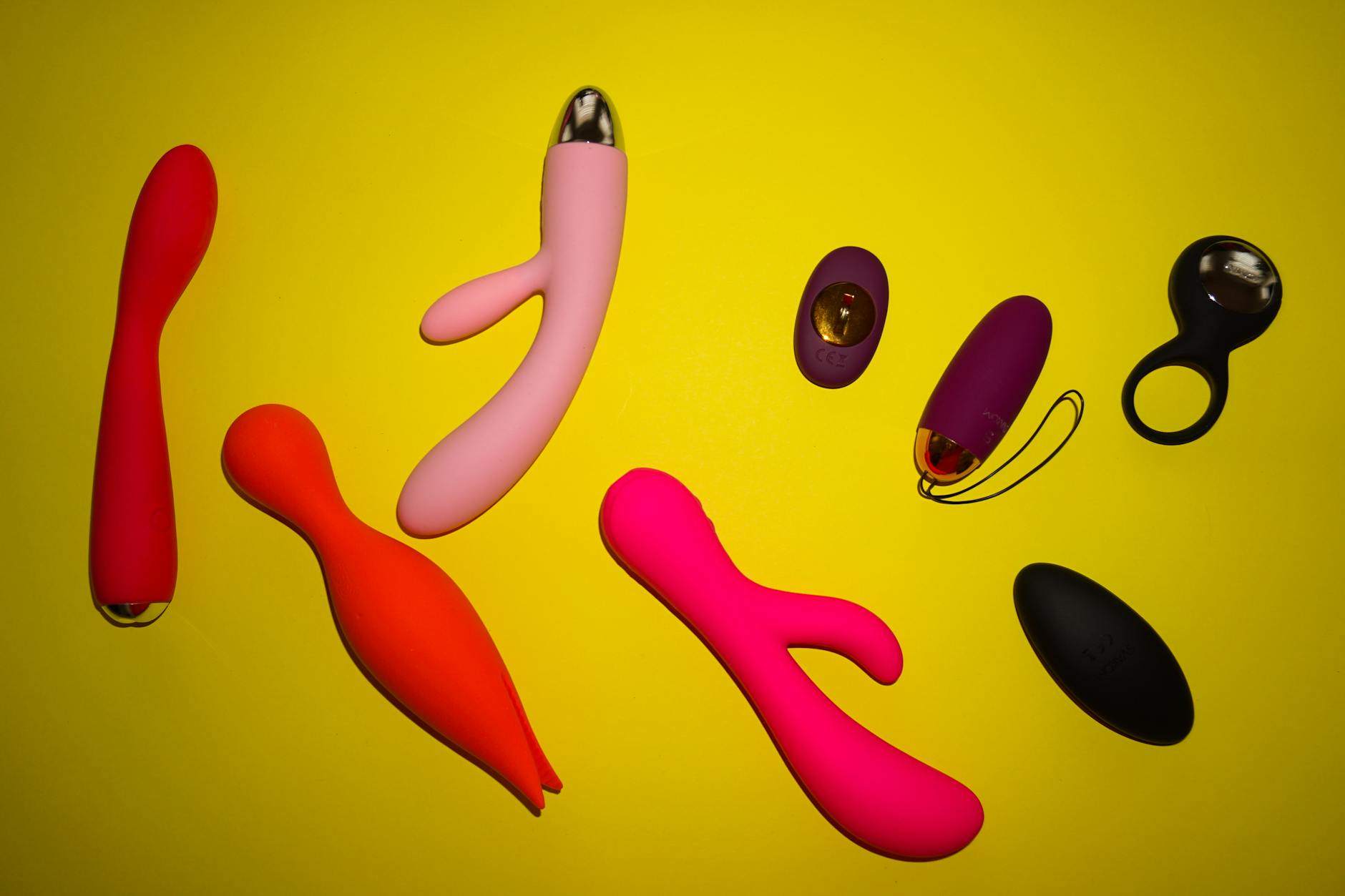
Why Lemon Vibrators Feel Different When You're on Antidepressants
Your medication is working on your brain. That's affecting your body too. Here's what that means for pleasure, and how lemon clitoral vibrators actually help.
Antidepressants save lives. They also change how your body responds to touch, arousal, and orgasm. Most conversations about this stop at "sexual side effects" as if that's a complete thought. It's not. The experience is more nuanced, fixable, and sometimes actually better with the right tools.
I've worked with dozens of people navigating medication and pleasure. The pattern is always the same: they adjust their expectations down, assume something is broken, and live with less sensation than they need to. What actually happens is physiological, predictable, and absolutely workable.
Selective serotonin reuptake inhibitors work by increasing serotonin availability in your brain. That stabilizes mood. It also affects the nerves that control arousal speed, genital blood flow, and orgasm intensity. Here's what changes most often.
Sensation dulls slightly. Not completely. Your clitoris still has full nerve density. But the signal feels quieter, like someone turned down the volume on pleasure. Touch that used to feel electric now feels pleasant. That's not your imagination. That's medication.
Orgasm takes longer. Sometimes much longer. Five to fifteen minutes of direct stimulation can become thirty to forty-five minutes or longer. This infuriates people who expect their body to work like it used to. But here's the thing. Longer arousal time doesn't mean less pleasure available. It means the path got wider.
There's also a refractory period shift for some people. Your body might need more recovery time between orgasms, or you might experience fewer intense contractions when you do climax. Again, this feels like loss. But it's actually just a different rhythm.
The good news: your brain still wants pleasure. Your capacity for orgasm is intact. What changed is the speed and intensity of the signal, not the wiring itself.
Let me be specific. Lemon clitoral vibrators use suction technology, not traditional vibration. That matters enormously when sensation is dulled.
With a standard vibrator, you're relying on nerve sensitivity to feel the vibration. If medication has quieted your sensory signal, a regular vibrator can feel like background noise. You're waiting for sensation that isn't strong enough to register.
Suction works differently. It pulls and releases against tissue, creating a mechanical effect that doesn't depend as much on raw nerve sensitivity. It's sensation through pressure change rather than vibration frequency. For brains on SSRIs, that translates to feeling more, even if raw sensation capacity is lower.
People on antidepressants often tell me the same thing: "The lemon actually works when other things don't." That's because suction bypasses some of the sensory dulling and creates a different kind of stimulation altogether.
Starting on a lower intensity setting also matters. If you jump to pattern 5 on a standard vibrator and feel almost nothing, you'll assume you're broken. With lemon vibrators, many people find that patterns 2 through 3 are exactly what they need.
Here's what happens in roughly 80 percent of cases. First two to four weeks on SSRIs: side effects feel most intense. Your body is adjusting. Orgasms either disappear or take forever. Panic ensues.
Weeks 4 through 12: your body adapts. The initial shock settles. Sexual function doesn't fully "return" to baseline, but it stabilizes at a new normal. This is usually when people discover that lemon vibrators solve the problem they thought they'd have forever.
Three months onward: most people find a groove. They've either adjusted expectations, switched to a toy that works, or both. Some people actually report that their pleasure improves because anxiety dropped so much that they can finally focus.
The variation is real though. Some medications cause minimal sexual side effects. Others are notorious for it. Fluoxetine and paroxetine tend to hit harder than sertraline or escitalopram. But individual response varies wildly. Your nervous system's particular chemistry is unique.
Don't white-knuckle through those first weeks assuming this is permanent. It usually isn't. And if it is, there are adjustments.
First, talk to your prescriber if orgasm is completely impossible after six weeks. That's worth mentioning. Sometimes a dose adjustment, time shift (taking medication at night instead of morning), or adding a second medication to counteract the sexual side effect is the answer.
Second, extend your timeline. Budget thirty to forty-five minutes for pleasure instead of fifteen. That sounds annoying until you realize that longer arousal often means deeper, more full-body sensations. You're not losing time. You're gaining access to a different kind of experience.
Third, use water-based lubricant. Sensation dulling plus slower arousal can mean less natural lubrication. Adding external lubrication removes friction and lets tissue respond more freely.
Fourth, try suction-based stimulation if traditional vibration isn't working. A lemon vibrator on pattern 2 or 3 often triggers orgasm when a standard vibrator at full intensity does nothing. It's not placebo. It's physics.
Fifth, build arousal intentionally. Read erotica for twenty minutes before touching yourself. Watch something you're genuinely drawn to. Let your brain warm up. That arousal work happens in your mind first. Your body follows.
Some medications cause sexual side effects that are intolerable and permanent. If you're six months in, trying every workaround I've mentioned, and pleasure is still completely absent, that's worth a conversation with your doctor.
You have options. Different SSRIs affect different people differently. Bupropion actually increases libido for some people. Tricyclic antidepressants work for many folks without sexual side effects. Switching is not failure. It's optimization.
The goal here is simple: you deserve a medication that stabilizes your mood and lets you experience pleasure. Those two things are not mutually exclusive. It might take some adjustment to find the right one.
If you're with a partner, they need to understand this shift too. "I'm on medication and orgasm takes longer" is a completely different conversation than "I don't want you anymore." Confusion between the two turns a solvable problem into relationship friction.
Let them know you need longer warm-up time. Tell them that sensation feels different. Maybe introduce them to the lemon vibrator together. Show them that this is about adaptation, not rejection.
Many partners actually find that longer arousal time improves their experience too. Slower means more time to connect. Less pressure to perform means more actual presence. That's not a consolation prize. That's sometimes better.
Your medication is working on your brain. Your pleasure is not broken. It's recalibrated. That recalibration is fixable through tools, time, communication, and sometimes medication adjustment. You don't have to accept reduced sensation as the cost of mental health. Those things can coexist.
No, but most SSRIs do to some degree in some people. Bupropion and tricyclic antidepressants tend to have fewer sexual side effects. Individual response varies wildly. Just because your friend had no issues doesn't mean you won't. Just because you did doesn't mean your next medication will.
Usually four to twelve weeks, sometimes longer. Your body adapts. But some people find that side effects persist or worsen. That doesn't mean it's permanent. It means you might need a dose change, time shift, or different medication. Talk to your prescriber if nothing has shifted after three months.
Yes, and it's worth discussing. Your mental health stability matters most, but sexual function matters too. A good prescriber will help you find something that does both. You might also try taking your dose at a different time of day. Morning instead of night sometimes reduces sexual side effects.
Often yes, because suction sensation is different from vibration sensation. You might feel the lemon vibrator more clearly even if standard vibrators feel dull. But every nervous system is different. What works for your friend might not work for you. If it doesn't after a few attempts, that's okay. Try something else.
Possibly. For some people, sensation fully rebounds after their body adjusts. For others, the new normal becomes normal and they stop comparing it to before. For others, switching medication solves it. No single answer applies to everyone. But the key point is that pleasure is absolutely still possible. It might just look different.